1Operating constraint
One facilitator needed to support two groups.
The sequence and handout were shared so that both groups could begin together, discuss within the group and continue without waiting for a single explanation.

CASE 4 / Matrain-planned activity
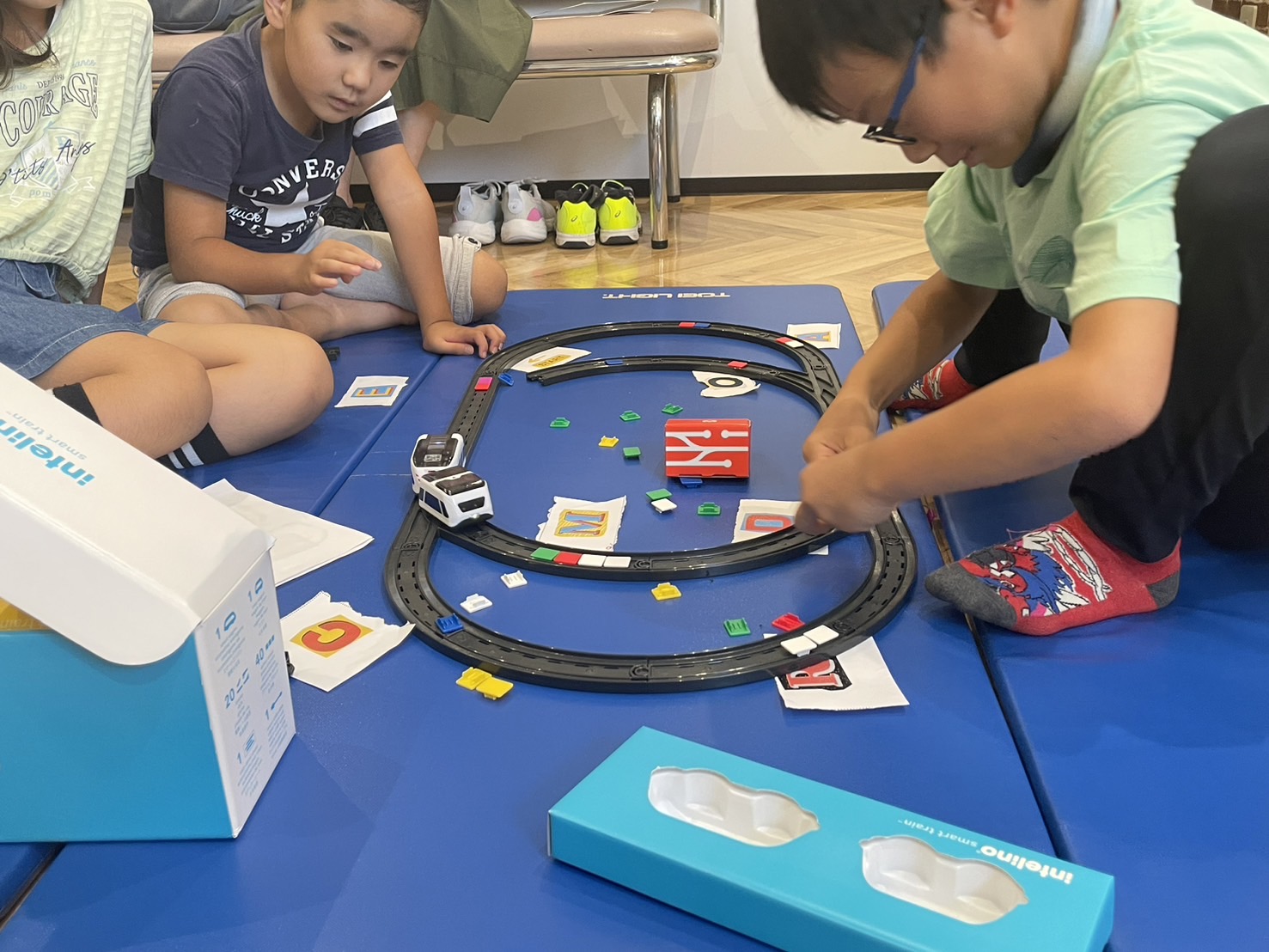
Background
The activity was held twice on 31 August 2025. Both groups began with the same instructions and sequence, then repeatedly rearranged tracks and color snaps. Matrain moved between the groups, allowing participants time to discuss and test before offering a question or hint.
Decision record
The sequence and handout were shared so that both groups could begin together, discuss within the group and continue without waiting for a single explanation.
Participants first tested how colors changed the train's movement, then worked together on a task that used those movements as clues to predict a word.
Participants took turns connecting track, placing snaps and watching the result. The facilitator stepped in when needed while preserving time for the group to think.

The first materials were the train, track and color snaps. Participants placed a color, ran the train and checked what changed. No computer skill was required to begin.
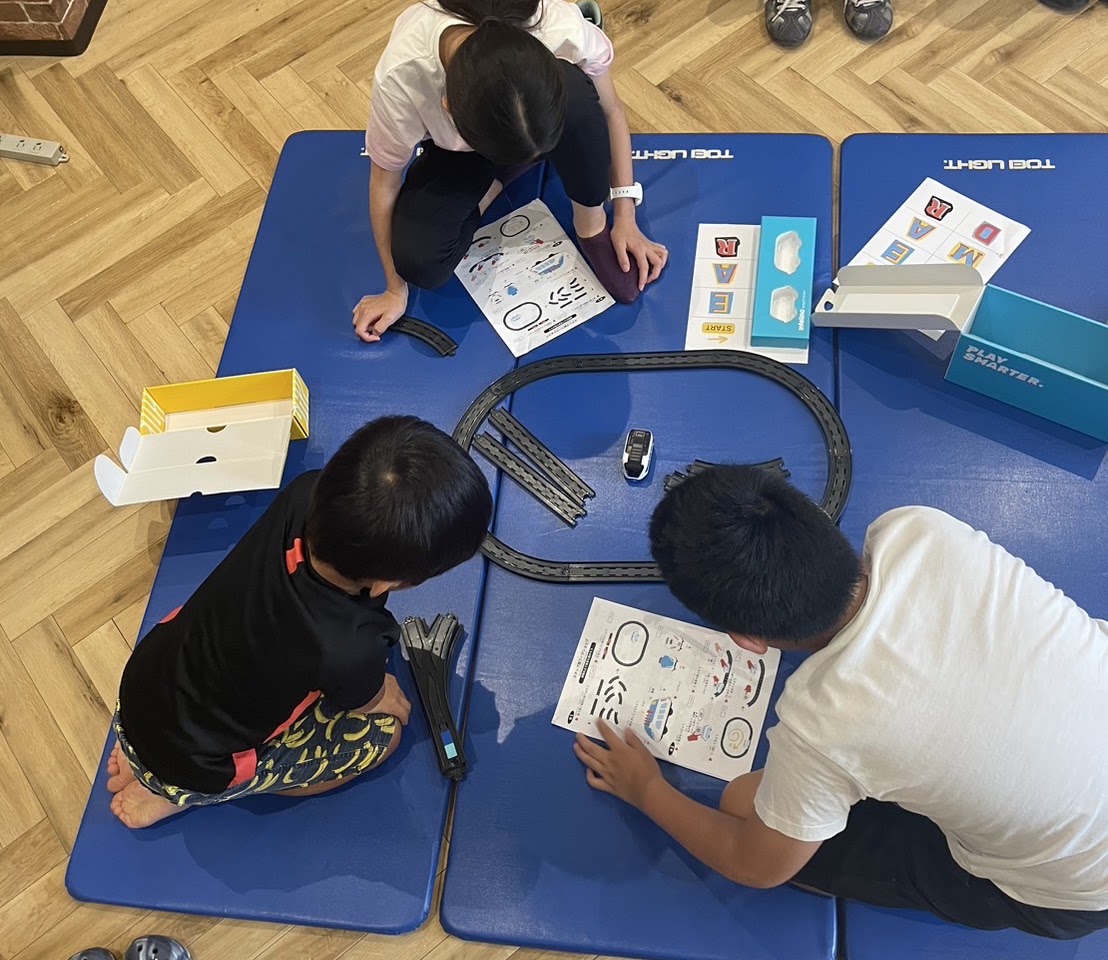
Both groups used the same handout and task sequence. Matrain moved between them, observing why progress had stopped before offering support.
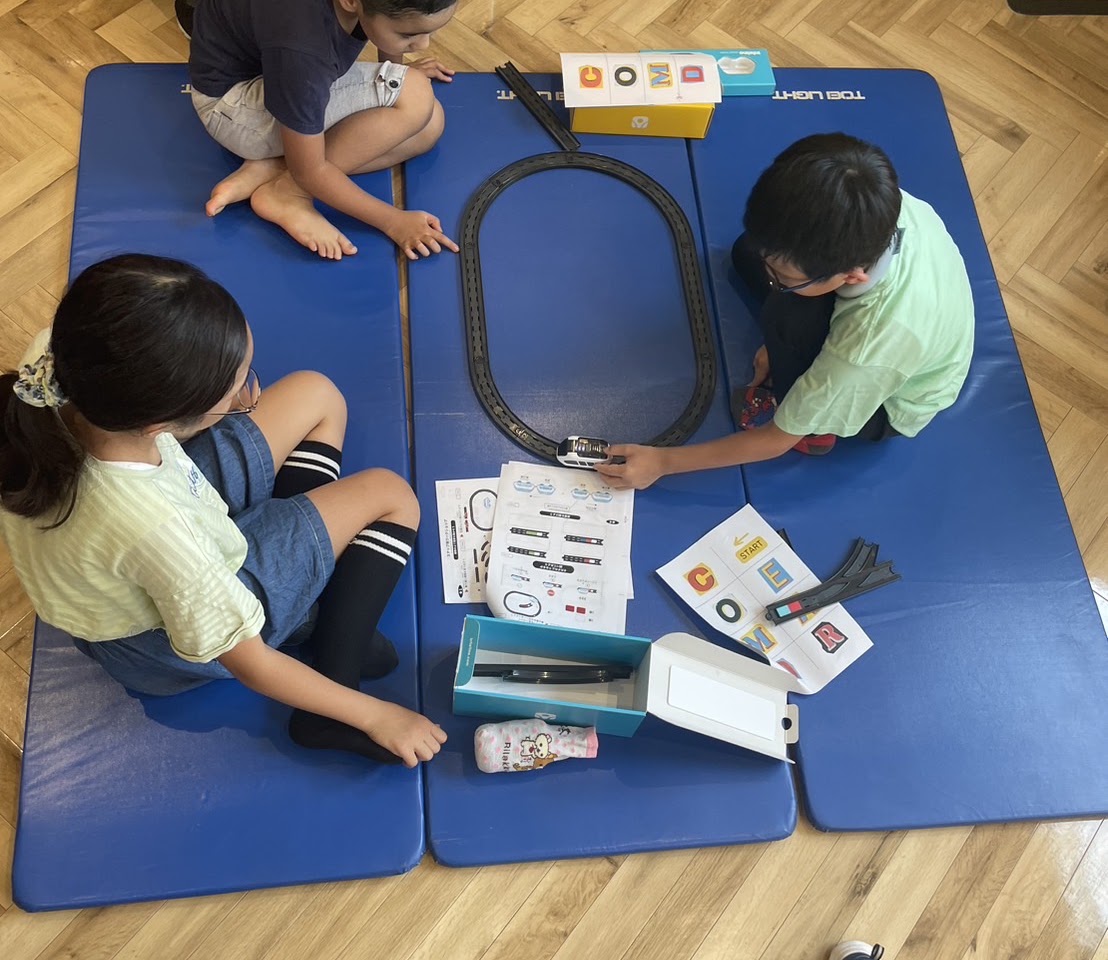
After the basic controls, each group discussed a common challenge, rearranged the track and snaps, and used another physical run to test its prediction.
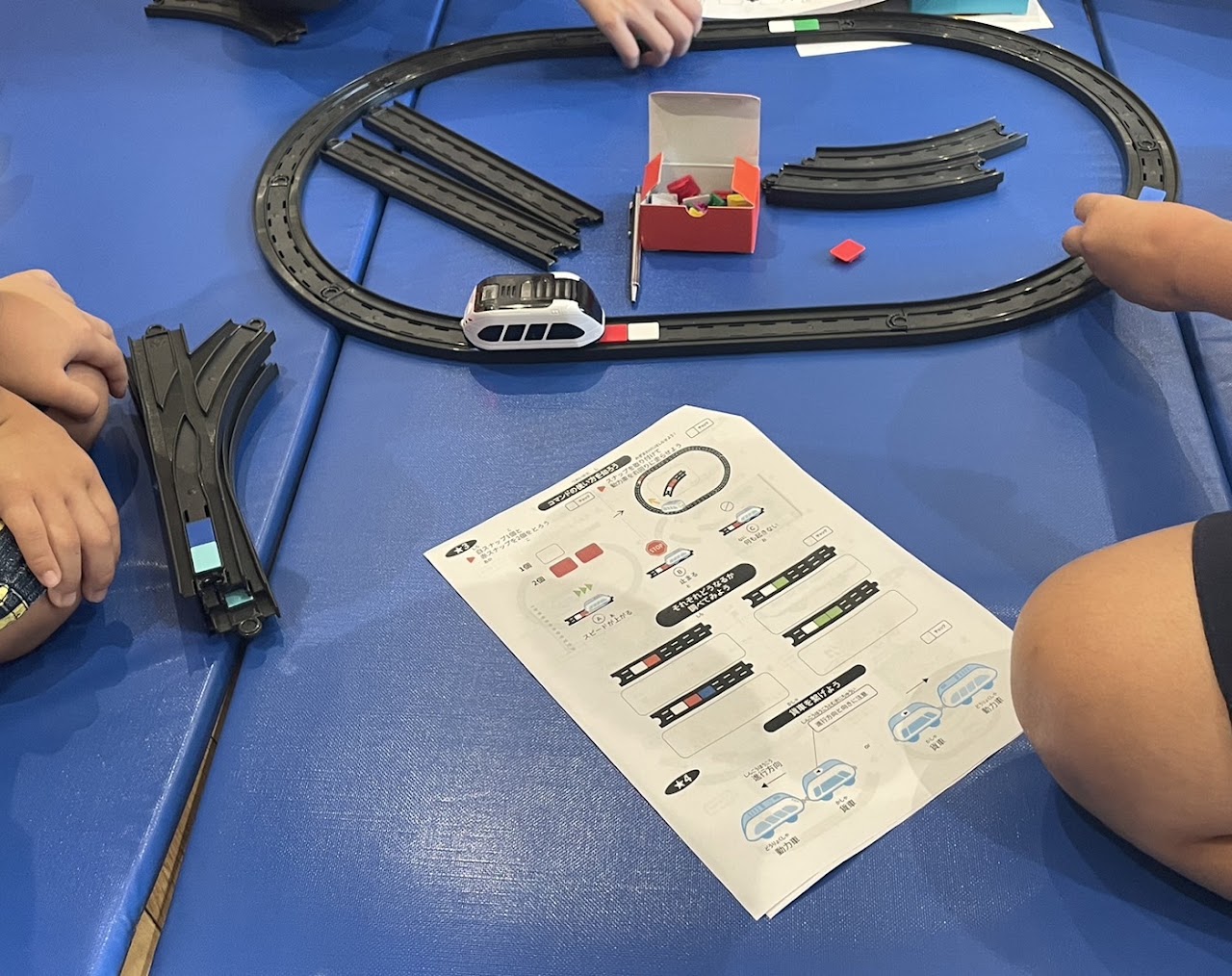
Supporting both groups required more than a handout. The facilitator first protected time for discussion, then added a question or hint when a group could not move forward.
What this case shows
With the task sequence, group size, handout and facilitation timing designed together, one facilitator supported eight participants in each session. The case shows how a 60-minute activity can be structured around discussion, testing and visible results rather than continuous instruction.
Public source: VIM Sports Avenue event announcement ↗Public source: Matrain activity report ↗VIM Sports Avenue official website ↗Discuss organizational use →